

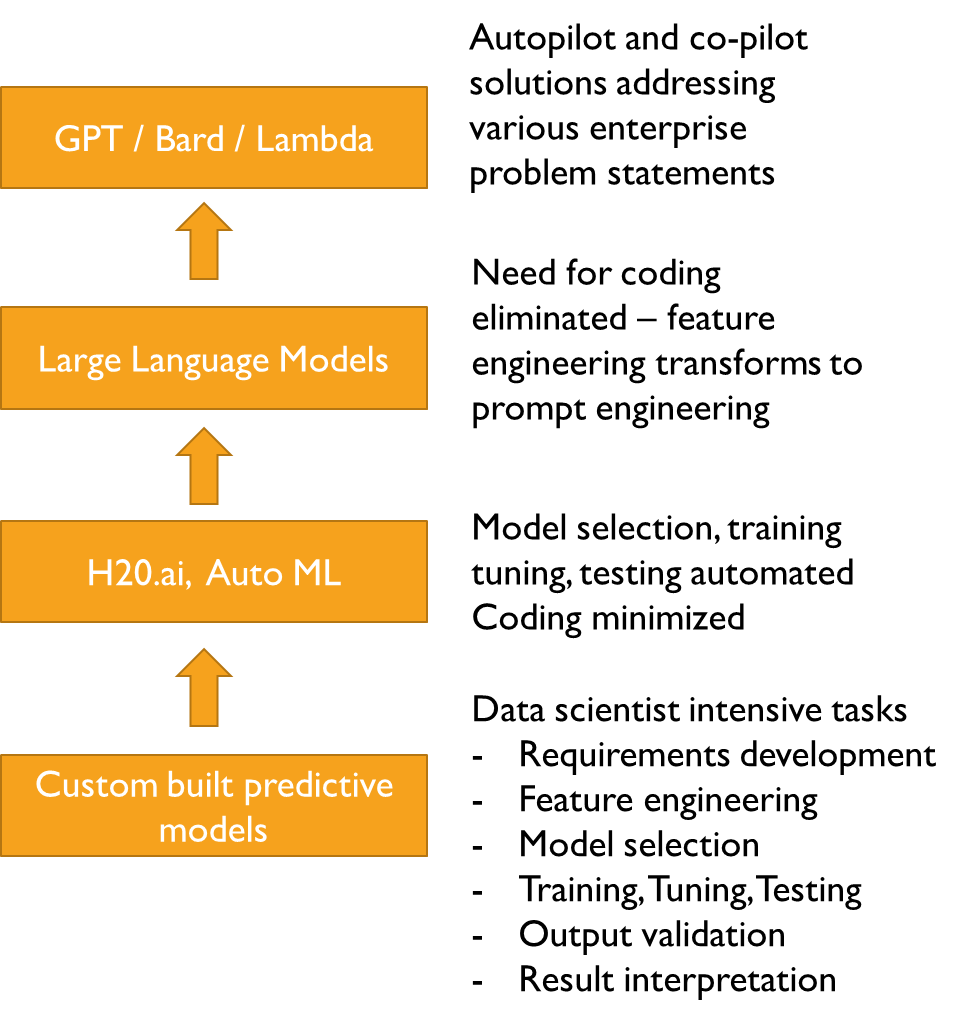
Data science methods, tools and technologies have evolved in recent times yielding benefits in productivity in analytical model development. Skill and entry barriers to the analytics profession have also been progressively lowered, as depicted below.
In a Forbes article in March 2023, Jena McGregor says “It may be too early to know if the bots are coming for your job, but it’s clear they’re going to impact how you work” An India Today article highlights the emergence of ChatGPT creating risks to content writing jobs, management consultant jobs and low-level coding jobs and suggests that the use of OpenAI for analyst work augmentation is certain to make management consultants anxious.
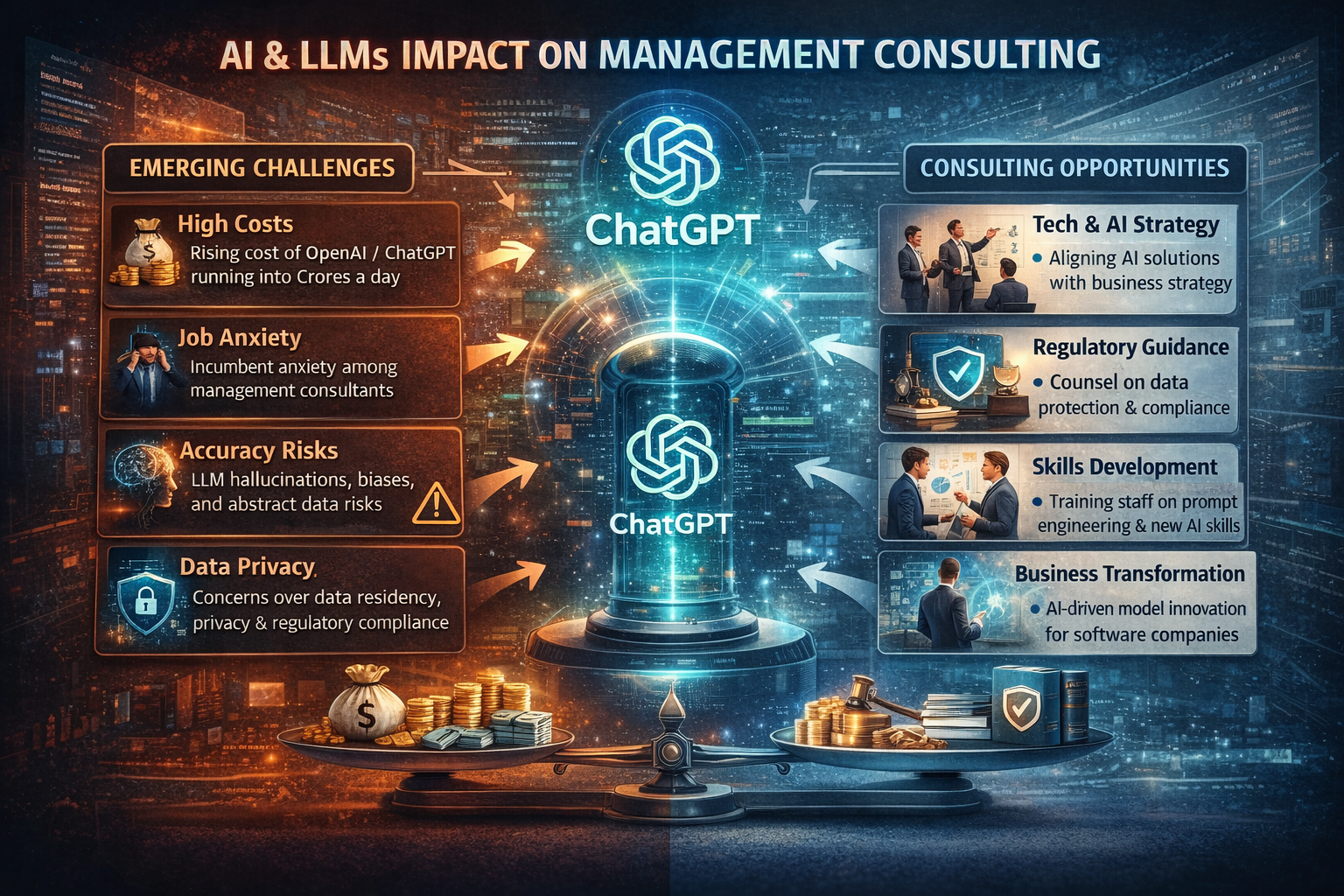
Having highlighted some of the benefits of LLMs, let us look at the emerging challenges. Along with rising costs of OpenAI / ChatGPT (estimated more than Rs. 5 crore a day), challenges include dealing with hallucinations in abstract summarization, generative question answering and general data generation. Cognitive biases influence AI solution design and can cause unintended effects such as in perpetuating current levels of sensitivities towards inclusiveness and diversity which organizations seek to improve on. The data privacy, data residency and protection implications of training LLMs with data exposed in the public domain is the subject of debate and regulation such as in India’s DPDP act.
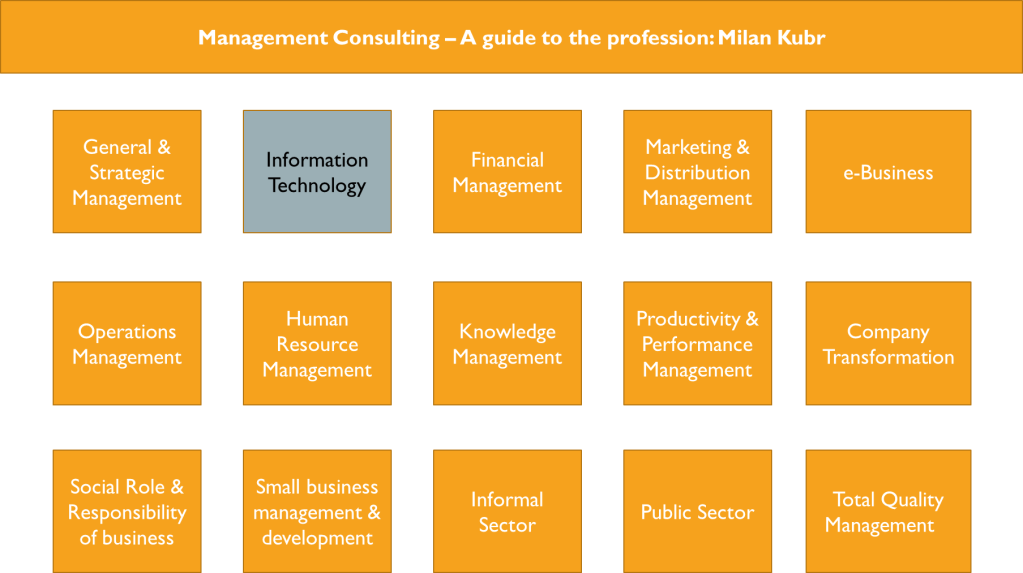
McKinsey’s AI leader Alex Singla stated that problem solving, creativity and change management are not replaced by technology. From the perspective of ILO (International Labor Organization), ICMCI (The International Council of Management Consulting Institutes) and it’s member organizations (such as the IMCI), the book Management Consulting – A guide to the profession by Milan Kubr serves as a reference for consulting framework and leading practices.
This framework highlights the Management Consulting areas as follows, with Information Technology shown as a distinct consulting discipline where the subjects of data and analytics are dealt with.
AI is creating value across functions in activities required to automate tasks, consolidate and synthesize information. Given these developments, the following opportunity areas for management consultants may be worth pursuing.
– Helping companies develop Tech strategy & AI stack aligned to business strategy – Learning and development of staff in new skills such as ‘prompt engineering’ – Guidance / counsel on data protection and regulatory compliance – AI triggered business model transformation of software companies – Emerging paradigms with Information Infrastructure & Information Security – Enhanced knowledge management content and tech for ‘point of use’ applications – Public Sector: Information Security and Infrastructure Strategies for National SecurityThe Management Consulting process as articulated by Milan Kubr is illustrated as follows: –
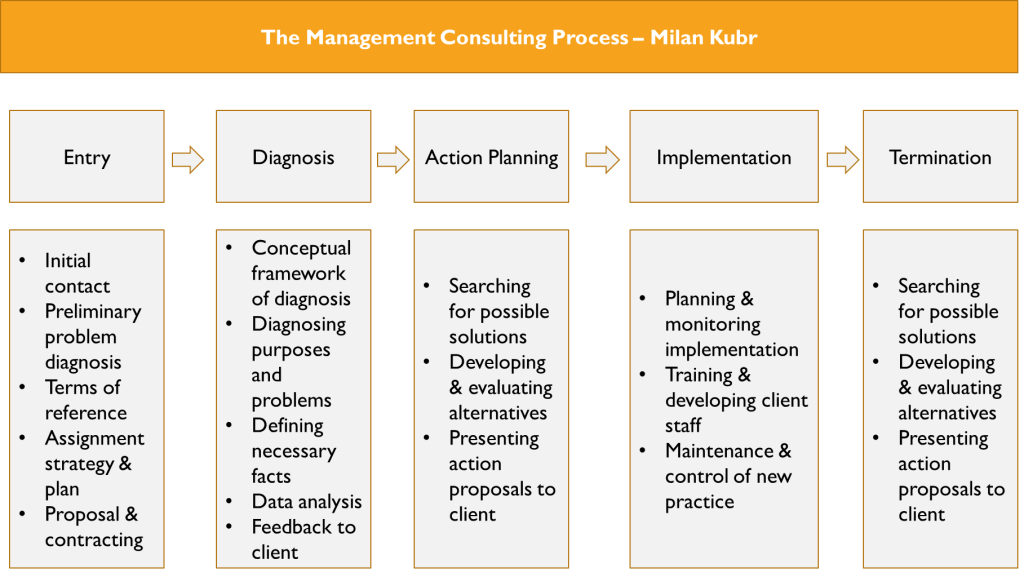
Given the emergence of LLMs bolstering AI capabilities, some of these phases of consulting can be AI led and AI enabled as illustrated below.
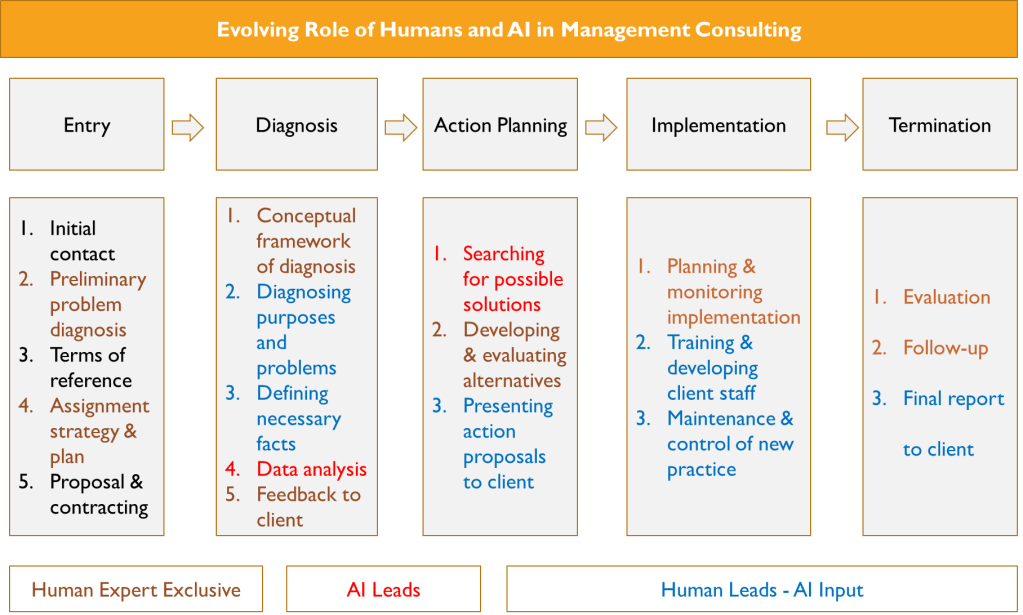
Given the benefits of LLMs, it is time for management consultants to reinvent their craft and include or increase the usage of AI in consulting delivery.


 Decision Radius