

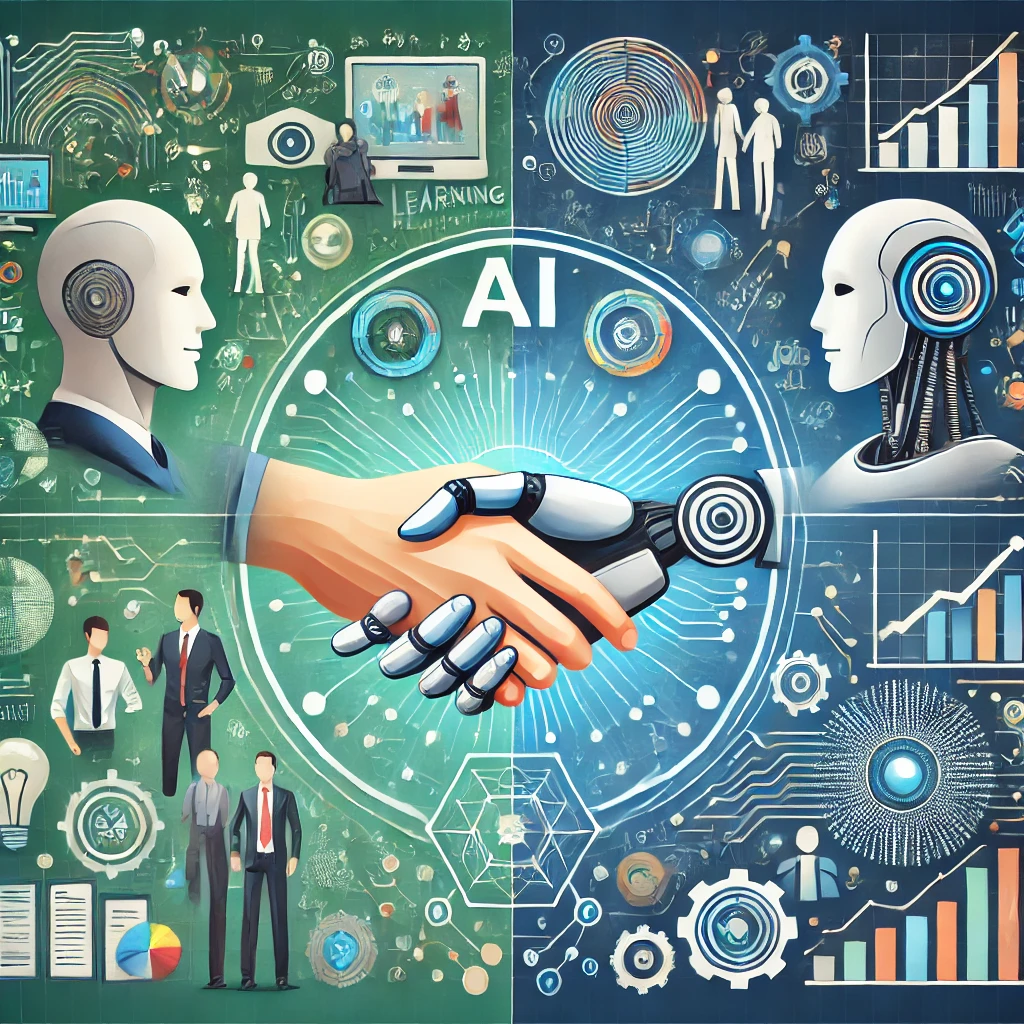
We are in the midst of a profound AI-driven transformation of work. Generative AI is reshaping how tasks are performed, how skills are defined, and what it means to be qualified for a role. While many organizations focus on using AI to automate tasks or replace human effort, the real and sustainable opportunity lies in augmenting human capabilities—enhancing creativity, judgment, and productivity rather than displacing people.
This shift requires a new approach to talent management. Instead of asking how AI can replace humans, organizations need to ask how AI can unlock human potential and create more meaningful work experiences. Doing so demands updated frameworks for workforce development, performance measurement, leadership, and governance.
The People Capability Maturity Model (PCMM), which historically guided workforce development through five maturity levels—from Initial to Optimizing—provides a strong foundation but needs to evolve for the AI-augmented workplace. Generative AI changes how skills are developed, how roles are designed, and how value is created, making traditional people-only capability models insufficient.
In an AI-augmented organization, workforce development must include AI literacy, prompt engineering, ethical and responsible AI use, and continuous reskilling. Workforce planning must anticipate role shifts, job displacement, and the emergence of new roles such as AI trainers, auditors, and supervisors. Performance management must move beyond individual output to assess how effectively people collaborate with AI, generate insights, and adapt to evolving tools.
Ethical and responsible AI practices must be embedded into people policies so employees can recognize bias, misuse, and accountability risks. Career paths need to reflect hybrid human-AI roles rather than linear, traditional progressions. Change management becomes critical to build trust in AI systems and enable smooth human-AI collaboration. Compensation and recognition models must evolve to reward effective use of AI, not just effort or tenure. Leadership itself must adapt, requiring data fluency, ethical awareness, and the ability to manage human-AI teams.
These principles extend across all PCMM maturity levels:
- At early stages, AI can reduce chaos by automating routine coordination and administrative work.
- At managed stages, organizations must integrate AI literacy, ethical usage, and AI-aware performance metrics.
- At defined stages, competency frameworks and career paths must explicitly include AI-augmented roles.
- At predictable stages, AI-driven analytics can anticipate skill gaps, workforce risks, and future talent needs.
- At optimizing stages, generative AI enables continuous learning, ethical experimentation, and workforce innovation.
Evolving PCMM in this direction enables organizations to remain competitive while ensuring people grow alongside AI. The goal is not to optimize humans out of work, but to build a workforce where human judgment, creativity, and responsibility are amplified by AI rather than diminished by it.

 Decision Radius